
Published April 20, 2026 · 7 min read · By Parker Plumbing Pros
When a sewer line fails, you'll hear two broad approaches: trenchless repair and traditional excavation. Neither is automatically better — the right choice depends on what the camera shows and the conditions at your property. Here's a clear comparison so you can follow the recommendation instead of just accepting it.
Start with a camera inspection
Before either method is on the table, a video camera inspection should confirm the pipe's condition, the type of damage, and its location. This is non-negotiable: the camera findings are what determine whether trenchless is even possible.
Traditional (dig-and-replace)
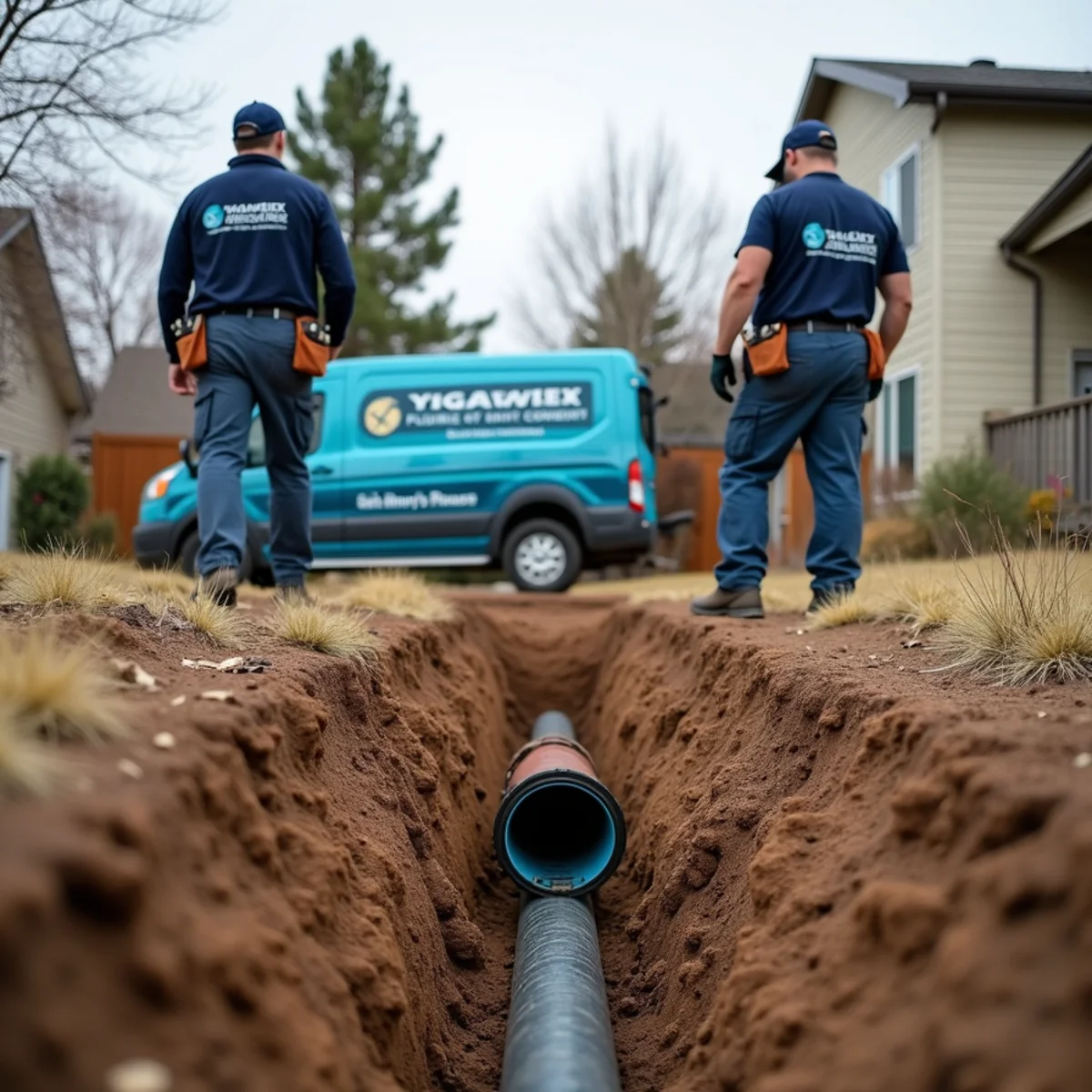
Traditional repair means excavating down to the damaged pipe and replacing the section. It's the proven method when a pipe is collapsed, severely damaged, badly bellied, or when access allows. The trade-off is disruption — trenching through a yard, and restoration of landscaping, driveways, or concrete afterward.
- Best for: collapsed, crushed, or severely damaged pipe; major misalignment.
- Upside: handles the worst conditions; full replacement of the section.
- Downside: yard and surface disruption, plus restoration cost and time.
Trenchless (lining)
Trenchless lining installs a new pipe wall inside the existing line, typically through small access points instead of a full trench. When the host pipe is intact enough to line, it dramatically reduces yard disruption. But it isn't right for every pipe — a collapsed or badly deformed line usually can't be lined.
- Best for: cracked or root-intruded pipe that's still structurally suitable for lining.
- Upside: far less digging, faster restoration, saves landscaping and hardscape.
- Downside: not an option for collapsed or badly deformed pipe.
Cost comparison
Parker-area benchmarks put trenchless lining around $4,000–$10,000 and excavation or replacement around $3,000–$15,000+, with broader sewer replacement ranging $5,000–$20,000. Trenchless can cost more per foot but often less overall once you factor in the restoration a dig requires. The real number depends on depth, access, and the damaged section.
The Colorado factor: roots and clay
In older neighborhoods like Englewood and Cottonwood, root intrusion into clay laterals is the common failure — and often a good trenchless candidate if caught before the pipe collapses. Expansive clay movement that has separated or bellied a line, on the other hand, may need excavation to correct the grade.
The bottom line
A good plumber compares spot repair, trenchless lining, and excavation in writing after a camera inspection — because these methods address different pipe conditions and site constraints. If someone recommends one before scoping the line, ask why.
Serving Parker, Englewood, and Douglas County, we camera-inspect first and lay out every option with honest pricing. Call us for a sewer diagnosis you can actually understand.
When trenchless isn't an option — the honest limit
Trenchless lining is a great method, and we recommend it whenever the pipe allows. But part of being honest is telling you when it doesn't. Lining installs a new pipe wall inside the existing one, so it needs a host pipe that's still structurally intact enough to line. A line that has fully collapsed, been crushed, or shifted badly out of alignment from clay movement usually can't be lined — the excavation is the only reliable fix, because there's no sound pipe left to line against.
This is exactly why the camera inspection comes first and why we compare methods in writing. A provider who quotes trenchless before scoping the line, or who insists on digging without explaining why lining won't work, isn't giving you the full picture. The pipe's actual condition — not a preference — decides the method.
Related plumbing services
Frequently asked questions
Not always per foot — but it's often cheaper overall once you include restoring the landscaping, driveway, or concrete a full excavation disturbs. The right comparison is total cost, which we lay out in writing.